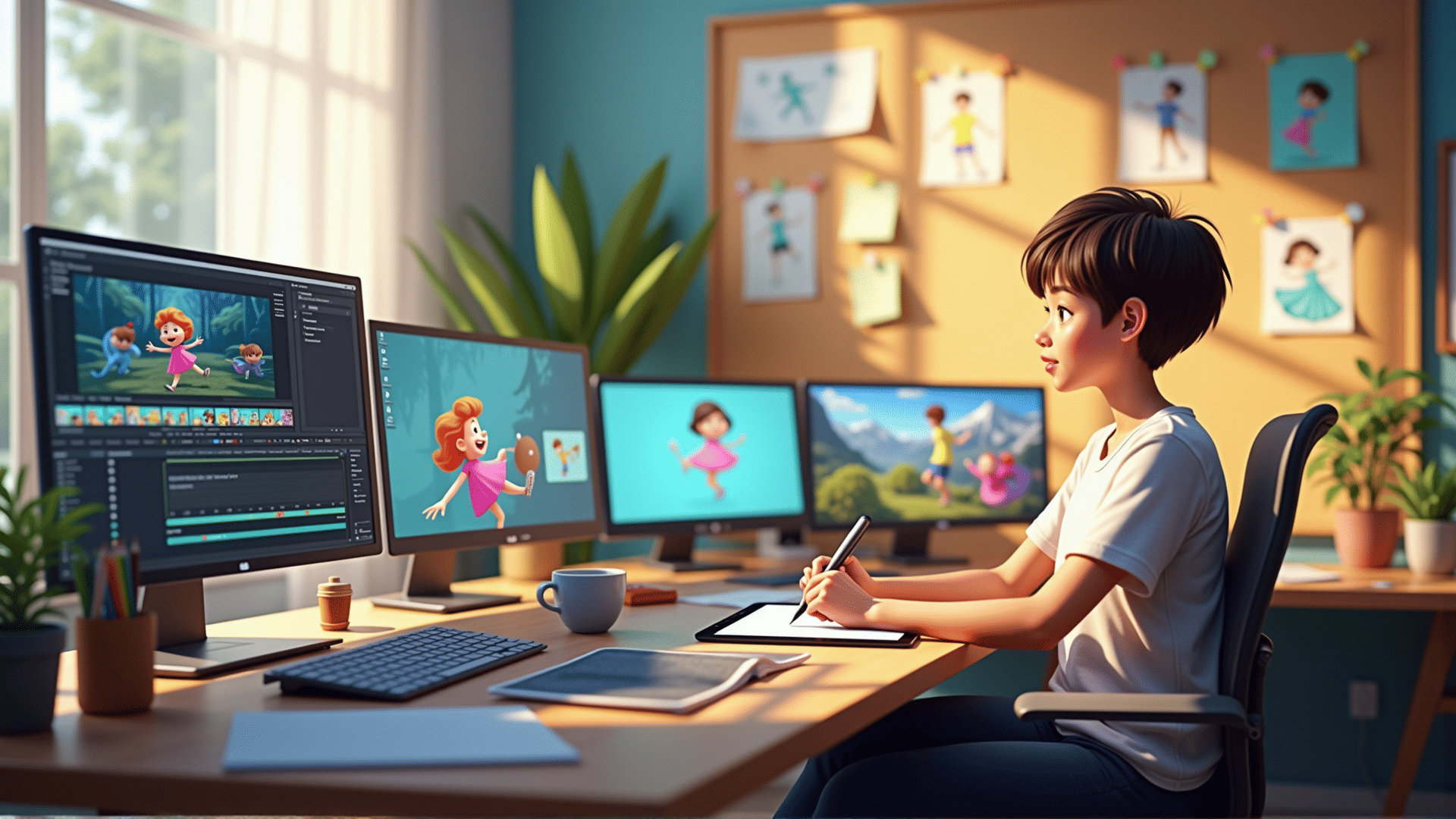
Animation has revolutionized the way stories are told, offering a dynamic and visually captivating medium to engage audiences. By incorporating animation into traditional video production, creators can enhance their narratives and bring them to life in ways that were previously unimaginable.
One of the primary benefits of using animation is its ability to transform complex ideas into easily digestible visuals. With animation, creators can simplify intricate concepts, making them accessible to a broader audience. This is particularly useful in educational content, where difficult subjects can be broken down into engaging animations that facilitate better understanding.
Animation also offers unparalleled creative freedom. Unlike traditional filming, which is often constrained by physical limitations, animation allows for the creation of entire worlds limited only by imagination. Characters can defy gravity, objects can morph, and time can be manipulated to create a narrative that captivates the audience's attention. This flexibility opens up endless possibilities for storytelling, enabling creators to experiment with styles and techniques to convey their message effectively.
To successfully integrate animation into video production, it's essential to adhere to some best practices. First, understanding the story's core message is crucial before adding any visual elements. Animation should enhance, not overshadow, the narrative. By aligning the animation's style and tone with the story, creators can ensure a seamless blend between live-action and animated elements.
Another vital aspect is proper planning and scripting. A detailed storyboard is indispensable in animation, allowing creators to visualize every scene and transition. This ensures the animation flows smoothly and aligns with the overall video pacing. Additionally, collaborating closely with animators from the start can help streamline the production process, as they bring valuable insights into what works best and how to execute the vision effectively.
Finally, using animation as a tool for storytelling should always prioritize audience engagement. Whether it's through humor, emotion, or intrigue, animation has the power to evoke strong responses from viewers. By maintaining a focus on what resonates with the audience, creators can craft compelling stories that leave a lasting impression.
In conclusion, integrating animation into video production is a powerful way to enhance storytelling. With careful planning, creativity, and a focus on the narrative, animators and video creators can work together to produce content that captivates and informs audiences, pushing the boundaries of what storytelling can achieve.